
Kisspeptin-10
Kisspeptin is a naturally occurring peptide that plays a critical role in regulating reproductive hormones by stimulating the release of gonadotropin-releasing hormone (GnRH). It is studied for its effects on fertility, hormone balance, and the regulation of puberty and reproductive function.
This information on kisspeptin is for educational purposes only and is not intended to diagnose, treat, cure, or prevent any disease.What is Kisspeptin-10?
Studies have shown that Kisspeptin is a naturally occurring peptide that plays a key role in regulating the reproductive hormone system by stimulating the release of gonadotropin-releasing hormone (GnRH). This action helps control downstream hormones like luteinizing hormone (LH) and follicle-stimulating hormone (FSH), which are essential for fertility and sexual development. It is widely studied for its effects on hormone balance, puberty, and reproductive health in both men and women.
Potential Benefits Shown in Studies
- Supports natural testosterone and estrogen production
- Stimulates release of LH and FSH for reproductive function
- May improve fertility and reproductive hormone balance
- Helps regulate onset and progression of puberty
- Supports libido and sexual health
- May enhance hypothalamic-pituitary-gonadal (HPG) axis function
- Explored for use in treating hormonal deficiencies and infertility
- May improve overall endocrine system signaling and balance
Mechanisms of Action
- Binds to kisspeptin receptors in the hypothalamus that control reproductive hormone signaling
- Stimulates the release of GnRH which acts as the master hormone for reproduction
- Triggers downstream release of LH and FSH from the pituitary gland
- Supports production of testosterone and estrogen in the testes and ovaries
- Helps regulate the hypothalamic-pituitary-gonadal axis for overall hormone balance
- Plays a key role in controlling puberty, fertility, and reproductive function
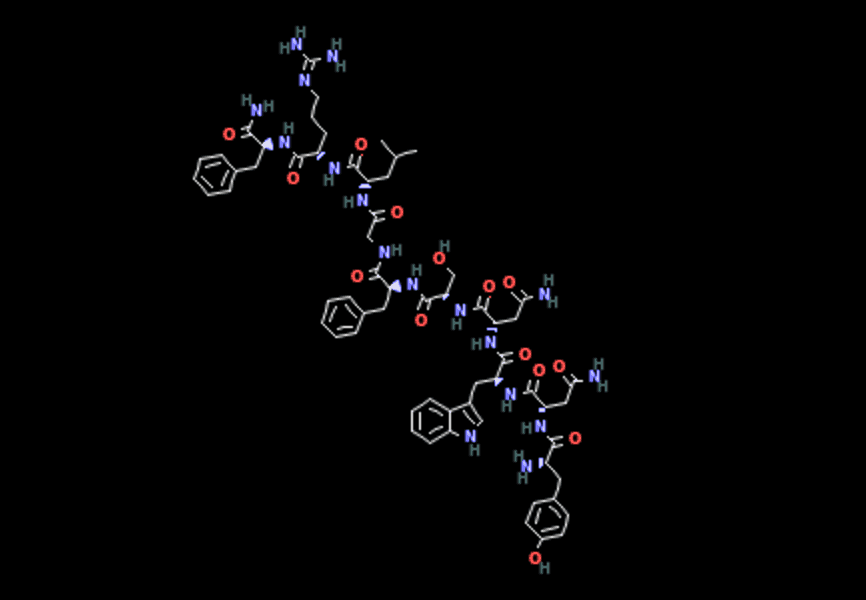
Molecular Structure
Sequence
Tyr–Asn–Trp–Asn–Ser–Phe–Gly–Leu–Arg–Phe–NH₂
Molecular Formula
C₆₃H₈₃N₁₇O₁₄
Molecular Weight
1302.4 g/mol
Source
PubChem